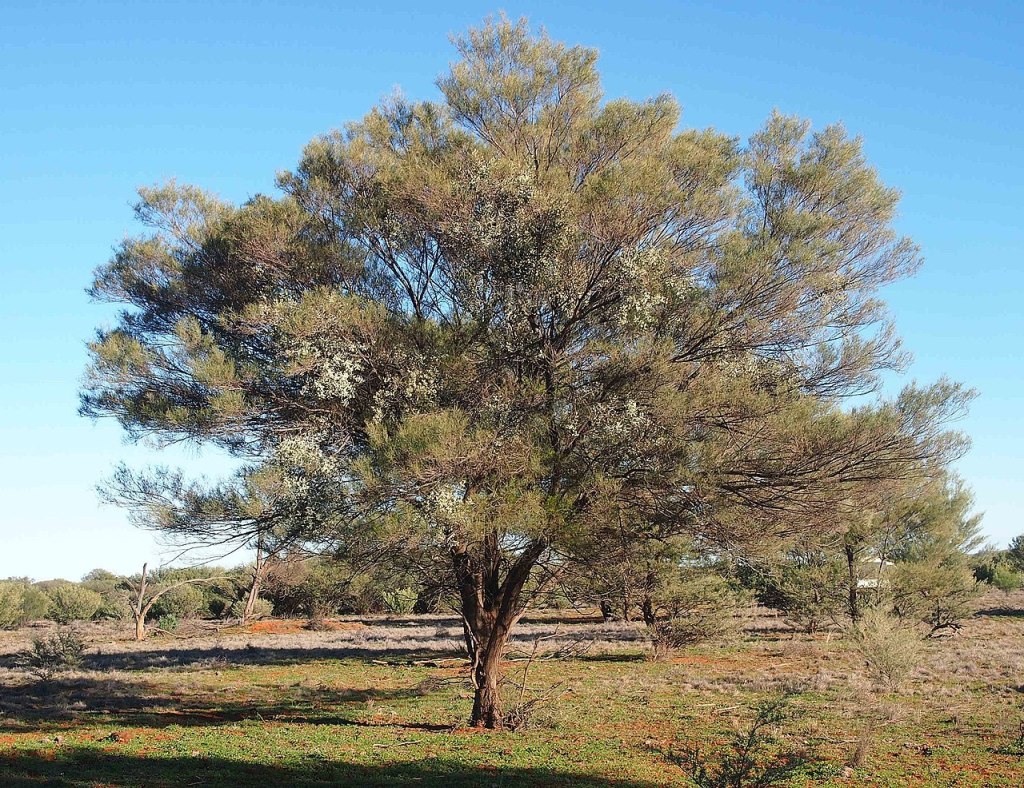
The Acacia, with its vast array of species, is a quintessential representation of the Australian landscape. Among them, the Acacia aneura, commonly known as the Mulga tree, stands out for its resilience and adaptability. This post takes you on a journey to explore the enchanting native habitat of the Mulga Acacia.
Desert Dominance
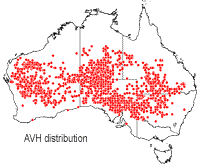
Acacia aneura primarily flourishes in Australia’s arid and semi-arid regions. These areas, characterized by their sparse rainfall and sweltering temperatures, might seem inhospitable to many plants. Yet, the Mulga tree thrives here, with an extensive range spanning Western Australia, South Australia, Northern Territory, Queensland, and New South Wales.
Soil and Terrain
The terrain where Mulga trees thrive is varied. They can be found on plains, dunes, and low rocky hills. The soil is often shallow, sandy, or loamy, but what it might lack in depth and richness, it makes up for with its impeccable drainage properties—an essential feature for desert-dwelling trees.
Rainfall and Water Conservation

Though the regions it inhabits receive irregular and sparse rainfall, the Mulga tree has evolved to make the most of what little water it gets. Its deep root system enables it to tap into underground water sources, while its phyllode-like leaves reduce water loss through transpiration.
Flora and Fauna Companions
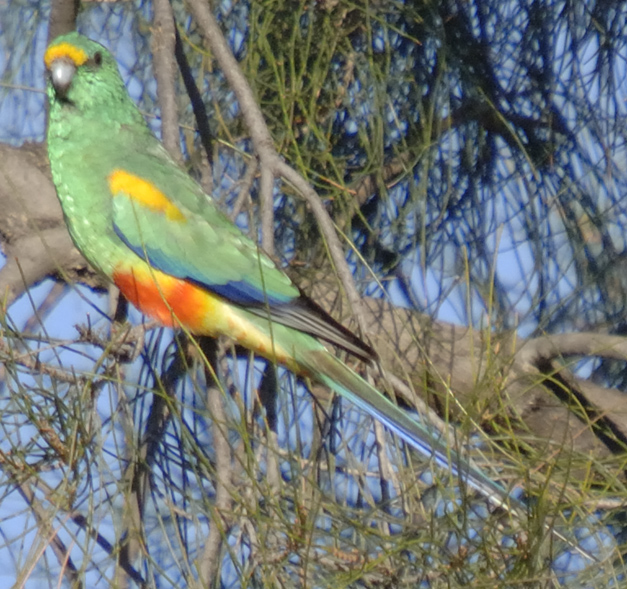
In its native habitat, the Mulga tree often shares its space with other desert-adapted plants like spinifex grasses. These ecosystems offer refuge to a variety of fauna, from birds like the Mulga Parrot to marsupials and various reptiles. The Mulga tree’s bark, seeds, and foliage provide essential sustenance and shelter for these desert inhabitants.
Human Interactions and Cultural Significance

For Indigenous Australians, the Mulga tree holds deep cultural and practical significance. Its wood is vital for tool-making, its seeds a nutritious food source when ground into flour, and its gum has been employed for medicinal purposes. Moreover, various parts of the tree play a role in traditional ceremonies, underscoring the bond between the Mulga and its human cohabitants.
Final Thoughts
The Mulga Acacia’s habitat is a testament to the raw beauty and resilience of Australia’s desert ecosystems. These regions, though seemingly harsh and unforgiving, brim with life and stories of survival, adaptation, and coexistence. The Mulga tree, with its ability to prosper in such conditions, serves as a remarkable emblem of the enduring spirit of the Australian desert.
Related Articles about Acacia aneura:
- Growing Mulga Trees in the Desert Southwest
- How to Propagate Mulga from Seed
- Mulga (Acacia aneura) Plant Profile
- Incorporating River Rock and Gravel in Desert Landscape Designs for the Southwest
- The Native Habitat of Acacia aneura: A Deep Dive into the Australian Desert
- How to Propagate Mulga Acacia (Acacia aneura) from Seed
- Growing the Mulga Trees (Acacia aneura) in Phoenix, Arizona
- Phoenix Landscape Maintenance

 Desert Gardener
Leave a comment